


There are many location-based games: Scavenger hunts, outdoor escape games, immersive outdoor adventures, etc. And there are many tutorials out there. But… How to make it fun? It might be more challenging than you think.
There are many ways to create such a game, but we often end up disappointed once we test the game with real players. With my years of experience in creating GPS games, I’ll help you with that!
So here’s a step-by-step guide to creating your own location-based game.

What is a Location-Based game?
Before we go to the guide, let’s define what a location-based game is:
A location-based game is an interactive experience where players use real-world locations, often through GPS on mobile devices, to complete challenges, solve puzzles, or progress through a story.
Is it exactly what you’re looking for? Does your project match every aspect of this definition? If yes, then you’re good to go with my upcoming location-based game!
Step-by-Step: How to Create One
Now, imagine that you write your idea down somewhere. Get ready to do some brainstorming following my guide:
Step 1 Define Your Game Goal
What did you have in mind when designing your game? team-building, fun, education, or anything else?
That’s an important preliminary question: This allows you to remain coherent with all the aspects of your game. It gives your game a backbone that will make players think, “That game is good despite its flaws”. Once you have a clear goal, do not change it.
For example, if you create a game for team-building, you’ll know the game needs to be shorter than 1 hour, with simpler questions, and questions related to the client’s company.
Otherwise, if you’re making a game for Christmas for families, it needs a location with a celebration, such as a Christmas Market. Here’s one example that went on TV, as it was successful.

Step 2 Choose Locations
Did you get your main goal? Good, Now, let’s choose your location.
Is it a game interacting with the environment? Such as a historical tour game? Then it shouldn’t be too difficult. Is it a team-building game that can be placed anywhere? Find a large public space such as an urban green park.
If the game interacts with the environment, then think of a good location where the player starts. It has to be an easily identifiable place where the sight is nice: Typically an old town’s square. For instance, I developed a game for Monaco, and it started… At the start line of the racetrack location! I remain coherent with the game itself.
If your game can be set up anywhere, with the tool you use, make sure that you can easily move all the location-based tasks in a few clicks (like Loquiz does).

Step 3 Design Challenges
When you have your goal and your location, you have to define what can be particularly challenging in your game.
For an outdoor game, it’s important to make something simple but impactful. Contrary to a PC game, people aren’t going to play comfortably with full focus to solve challenges. No. Here, they’ll be outdoors, with a small screen that becomes even less visible with the sun.
For outdoor games, simple riddles, concise text, and photo tasks are perfect for that. Create riddles that make players debate, and photos that make them create a fun scene outside (children especially enjoy this kind of challenge).
If the process of creating quizzes is tough for you, feel free to just pick some of the numerous puzzles I’ve created (such as logic puzzles or visual riddles). I also made a list of fun photos to take.
Here’s one example of a fun riddle that works in most location games:
Puzzle: You have two ropes and a lighter. Each rope takes exactly one hour to burn, but doesn’t burn evenly. How do you measure 45 minutes?
- a. Burn one rope until it reaches exactly 3/4
- b. Burn both ends and wait for 15 minutes
- c. Light both ends of one rope and one end of the other.
- d. Cut the ropes in 4
Click here to see the answer!
c. Light both ends of one rope and one end of the other. When the first rope burns out, 30 minutes have passed; then light the second end of the other rope.

Step 4 Add Game Mechanics
Once you have identified the different challenges in your game, find a way to connect everything as a whole. Add game mechanics that will ensure a memorable time for your players.
Think of your previous decisions:
What goal?
For who?
What challenges?
For example; if you created an outdoor escape game with clues that let the player find the exit: How do you connect all the clues into one mindblowing solution?
Players unlock a letter every time they solve a given riddle. On a board, they see all the letters: It forms a sentence. This tells the escape location.
That one mechanic is amazing because the players don’t need to catch 100 % of the clues to succeed. They plan what’s necessary to win. And it’s actually entertaining to plan a chaotic route when the game puts time pressure on you to succeed!

Step 5 Use a Platform
You’ll need a program that runs a geolocation feature and includes a GPS-activated task. Then it needs a whole game logic (especially if you include more complex game logic).
In that way, I do not recommend that you code it by yourself. I’ve met people trying to develop their own platform: It works very well in the beginning, but problems accumulate with time. The support is time-consuming. Specifically for the location-based games, the main challenge is network stability.
Spoiler: You never get a 100% stable network, especially not in the center of town. I’ve heard about entire games being stopped. Their system required a 100% stability from the beginning to the end.
What’s the answer for this? Take a game creation platform. If it has existed for years, it’s likely because the developers succeeded in fine-tuning their tool to provide a reliable tool that will work with your thousands of players across iOS and Android devices.
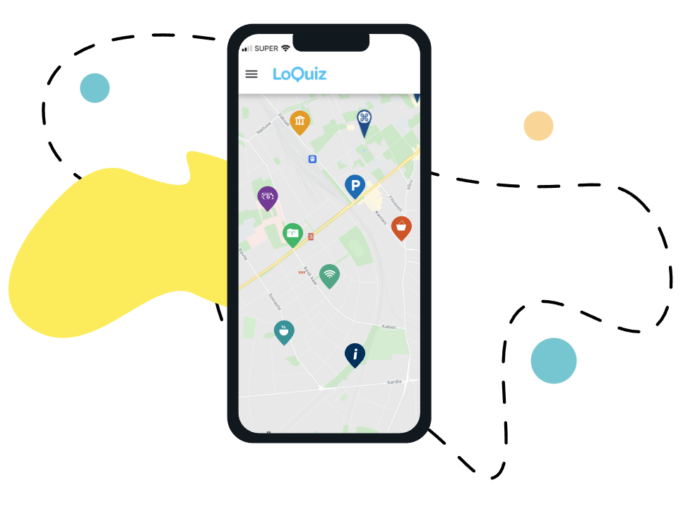
Loquiz lets you do all of this. And it has existed since 2011. Since that time, we have had time to develop a good reliability with a wide range of customization for your location-based games.
Examples of Location-Based Game Ideas
Since our tool, Loquiz, hosts a variety of GPS games, let’s expose some of the game ideas made with this platform.
Outdoor Scavenger Hunt
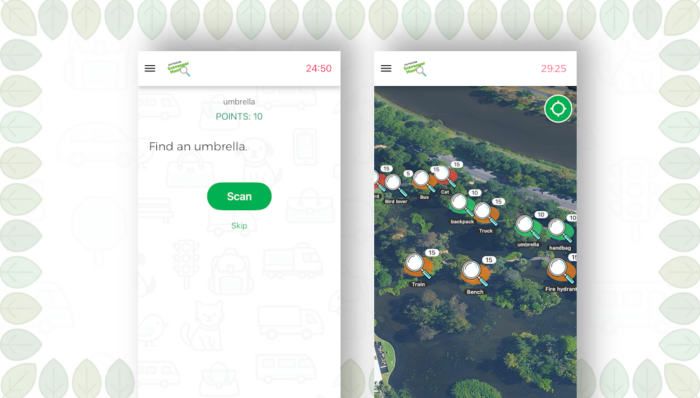
Place the different tasks across the map. Using the GPS feature, players have to reach them.
Each task gives you one assignment: One item to find with the “Object Finder” artificial intelligence. For instance, you have to find an umbrella. If you’re playing in a park, the players have to find someone wearing an umbrella!
Try this game out here.
Treasure Hunt
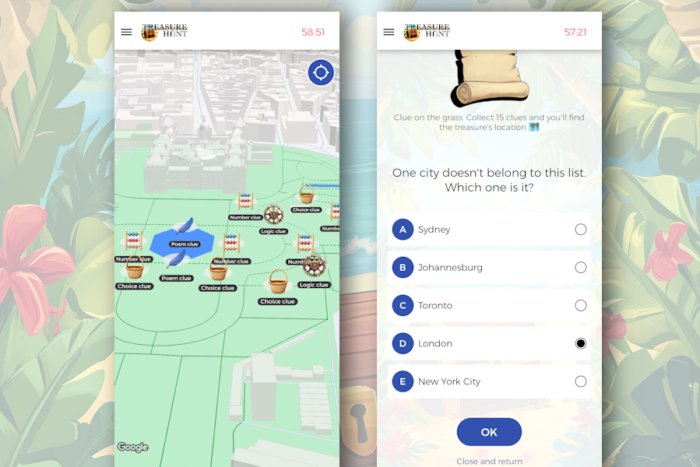
A treasure is hidden somewhere in the park. You’ll only find it if you gather enough clues across the area. To obtain a clue, you’ll need to complete the related riddle!
Same idea as the previous game, you can place the pins anywhere, especially thanks to the “move all pins” feature.
Try this game out here.
100 Coins
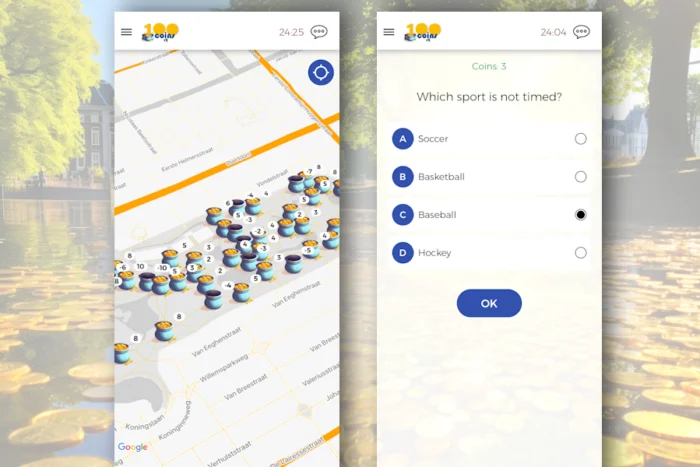
A lot of coins are spread all over your favorite park. Players have to collect exactly 100 coins, not 1 more, not 1 less. To do so, they’ll have to succeed in answering location-based tasks with riddles. Some of them provide a positive amount of coins, others negative.
Learn more about this game here!
Common Mistakes to Avoid
Once you’ve built your games, there are a few mistakes to avoid. From my years of experience building this kind of location-based game, I’ll give you 3:
Mistake 1: Not testing your games
In my experience, I spend a maximum of 1/3 of the development time for… Development. The rest should be only testing, upgrading, iterating, etc.
It’s especially the case with outdoor games: You never know what happens in the specific locations from your games: Road renovation, closed pavement, grass under maintenance, etc. Testing is the only way to avoid such bad surprises.
Also, if you let others test, you’ll get precious external points of view for the game design of your location-based game. Is it fun? Is there too much to run? Are the riddles too difficult? You’ll know it very quickly.
The Loquiz platform allows you to test as much as you want.
Mistake 2: Pins not set correctly
When you set your pins, they’ll depend on 2 main factors: Their GPS location and their area of activation.
For the GPS location, putting too much space between pins is a common mistake. It’s fun to run, but it’s not fun to have an unexpected marathon for a team-building game. It’s okay to have barely 10 or 20 meters between each pin.
Be careful with the area of activation. 10 meters is standard, but in other cases: You’ll need more. If you play on a mountain or in a dense city center, put 30 meters. If the players use a location-based game with cars, put at least 100 meters.
Mistake 3: Wrong game for the wrong audience
When you build your game, advertise it to the right people. This seems trivial, but I already made that mistake.
I offered a walking game for an audience who weren’t really keen on walking. Instead, if I offered this for younger people, I’d have more success and less customer frustration.
Besides, think of the complexity of the riddles, the game location, the amount of time, or the space between the tasks. From my own experience: Groups of young people enjoy competitive riddles, families have a medium level, and corporations want the easiest quiz possible. The latter seems surprising, but I could spend hours explaining the reason.
There’s one easy way to avoid that mistake number 3: Test your game as much as possible and ask your players if they have fun playing the game, if the riddles have a fair difficulty.

FAQ
When you’re building your location-based game tour, you might have a few questions popping up. Here are some common questions I’ve had myself while building these games:
- Is it legal to play my location-based game in a public park?
If your event has a moderate amount of players (under 50, I would say), or if your tour starts autonomously. Then it shouldn’t be an issue at all. If your event gathers more than 50 players in one place, check your local rules. In some cities or country, the local authorities might require some special permission to gather as many people in the same place. - Can I sell location-based games in different locations than mine?
Common sense would answer you “NO”. But I might not have that common sense, because I can tell you that it’s possible. Well, I said “NO”, I wouldn’t be developing location-based games in Australia or California from my comfortable office in Europe. In fact, if you have local people able to test your game and give you feedback, that’s all you need to ensure a smooth experience. - How can I sell my game or tour?
It depends on the audience: If you sell it to corporates, try to contact directly some companies looking for team-building experiences. If you sell to families, build a website and grow your audience using various marketing tools. You can also sell to activity platforms such as Groupon or Viator.
If any other questions arise, feel free to send me a message, I’d be delighted to help you.

Related stories
When you build your very own game on the Creator, there are many reasons why your game has an error....

When you host a team-building event with a lot of players, it can be challenging. With the QR code, you...

A teambuilding game can have many brainteasers or trivia questions. It sounds like serious work, so why not include some...
Start free trial to bring your ideas to life
Sign up and create games, tours, team events and educational content that captures peoples' attention
Start from the scratch or use templates to kickstart!